Work with Git and pull requests
Git panel
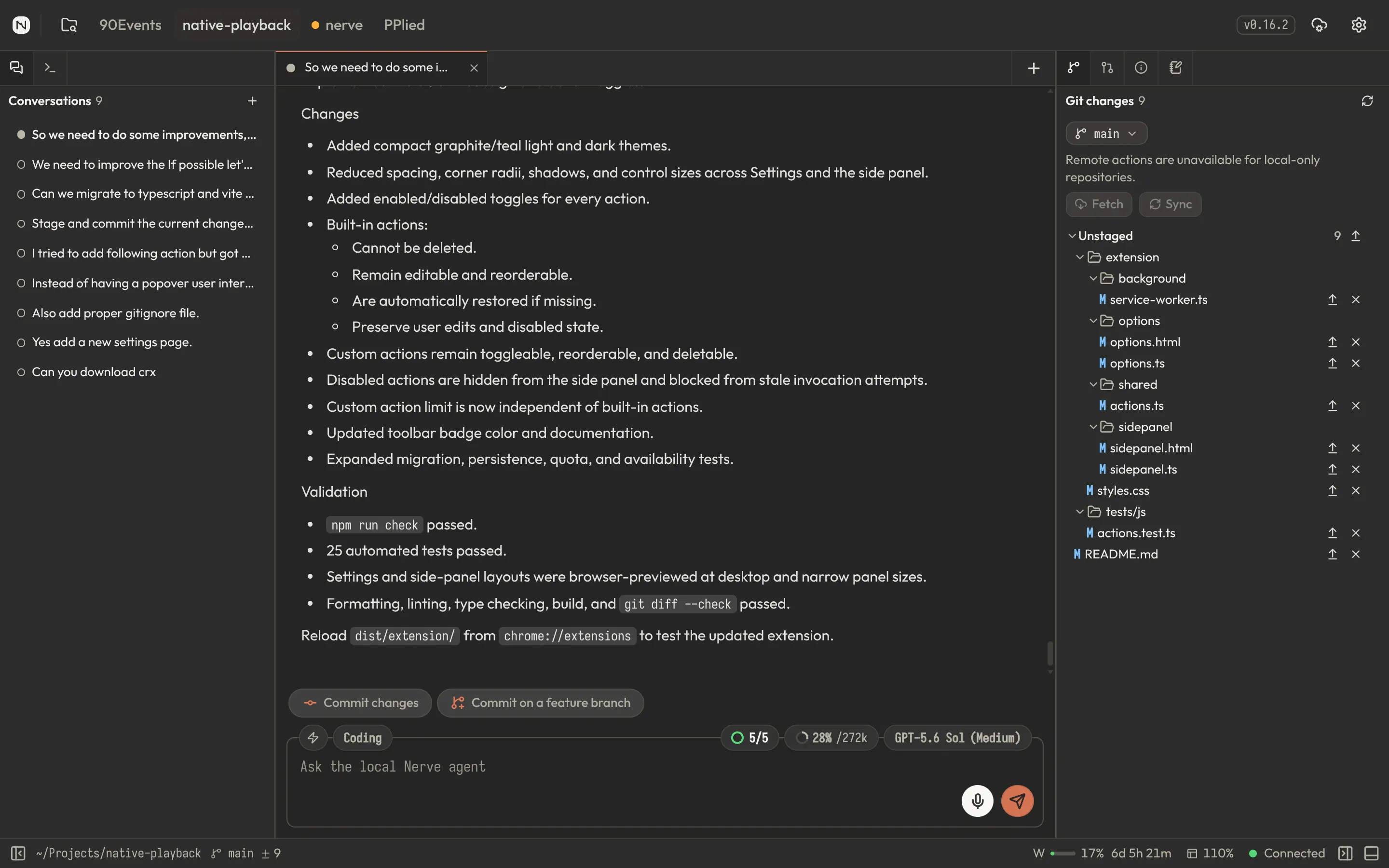
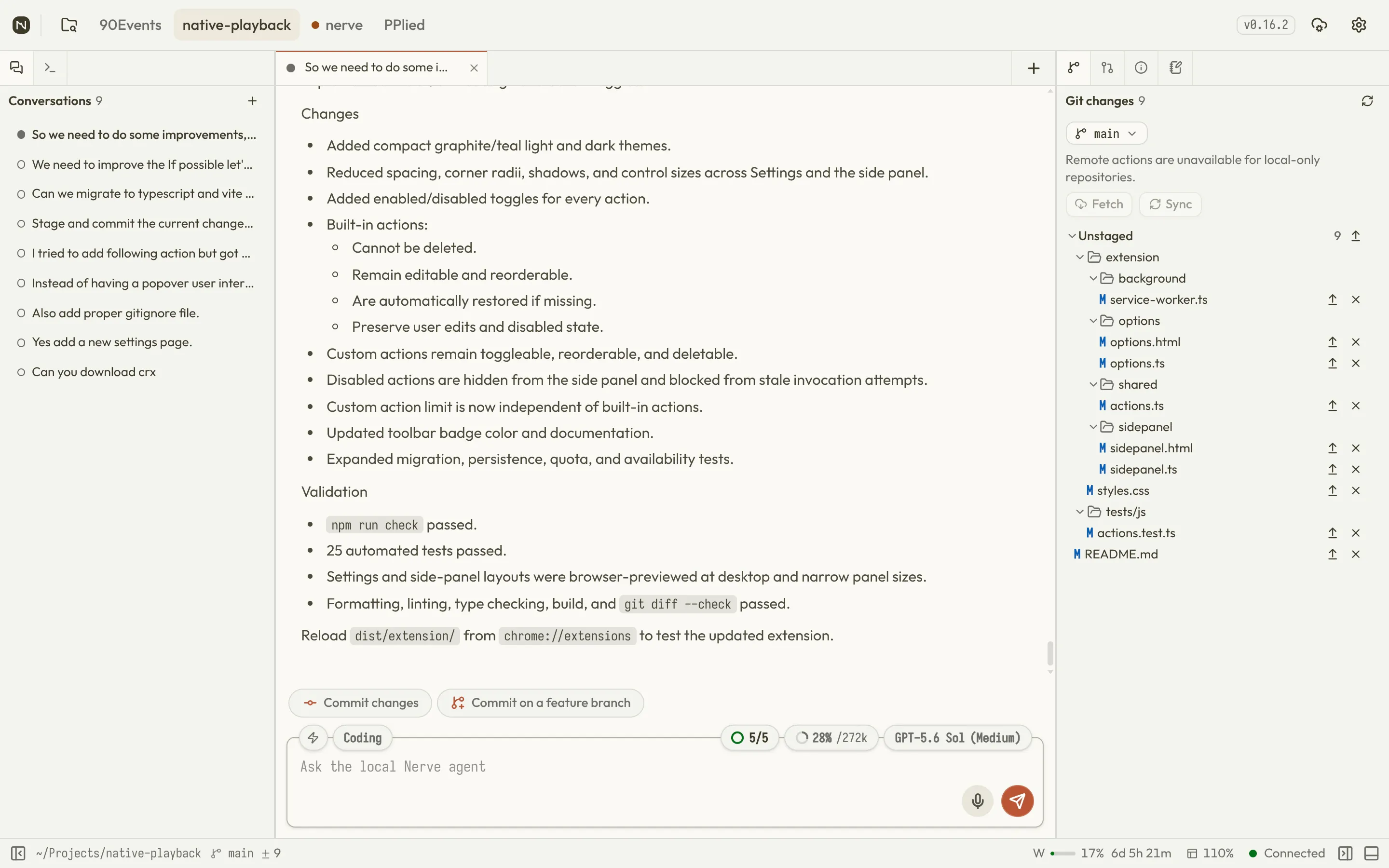
Section titled “Git panel”Nerve discovers repositories in the project and shows branch, working-tree changes, and recent commits. Available UI operations include branch creation and switching, stage/unstage, stash, discard, fetch, pull, push, and sync. The Staged and Unstaged headings expose visible whole-group actions; right-click a group, folder, or file for scoped actions. Destructive discard asks for confirmation. Folder expansion is remembered locally per repository and change area.
Stash actions preserve the area where you invoke them: stashing from Staged saves staged changes, while stashing from Unstaged saves unstaged and untracked changes without changing the index. File and directory actions limit the stash to that path. When a repository has saved stashes, Stashes (N) opens a manager where you can apply a stash without removing it or permanently drop it after confirmation.
These Workbench operations are server routes, not agent tools. An agent uses Git indirectly through finite Bash commands, subject to its mode and permission policy.
GitHub pull requests
Section titled “GitHub pull requests”GitHub support requires:
- a Git repository with a GitHub remote;
- the
ghCLI installed; gh auth logincompleted for the relevant host.
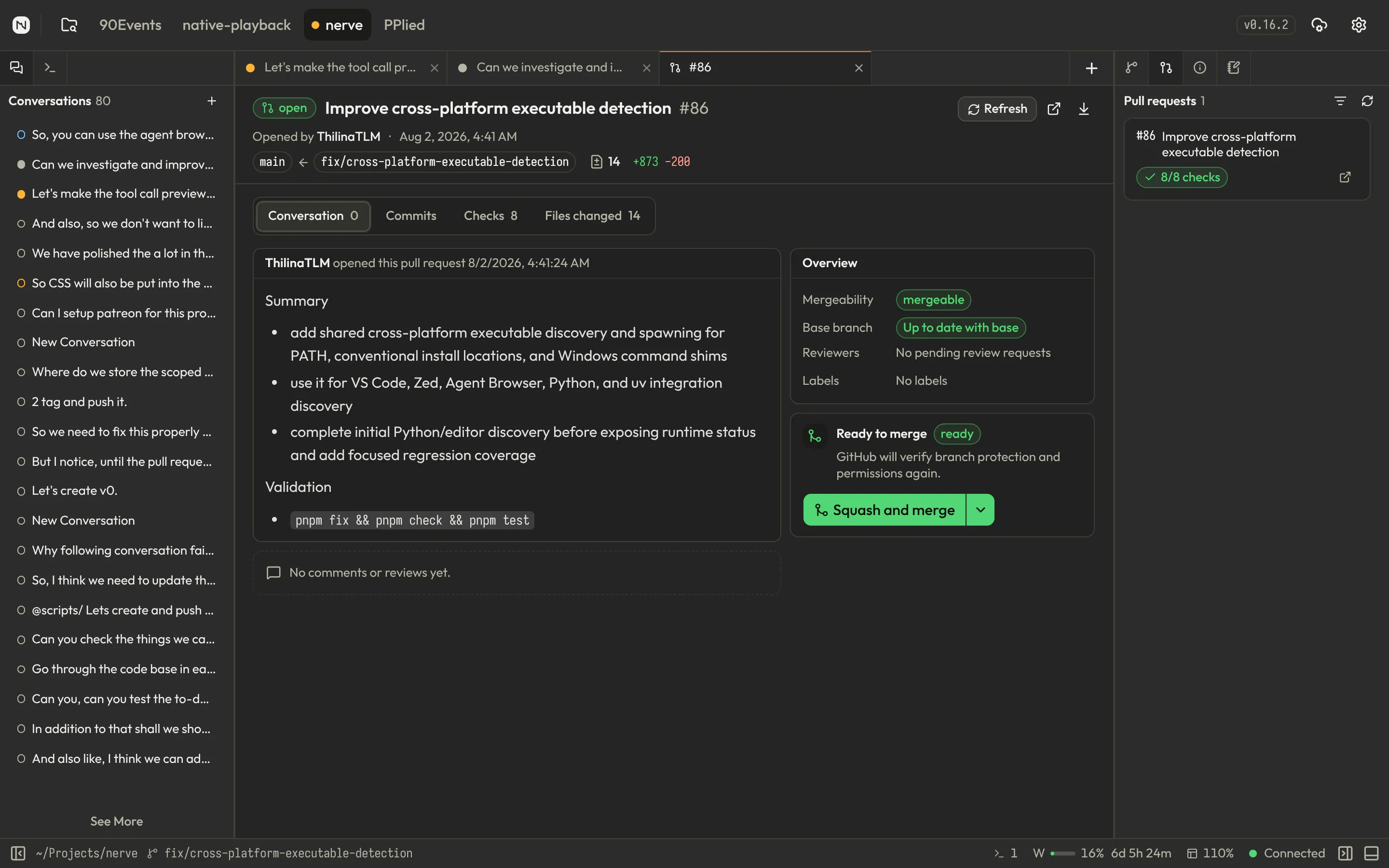
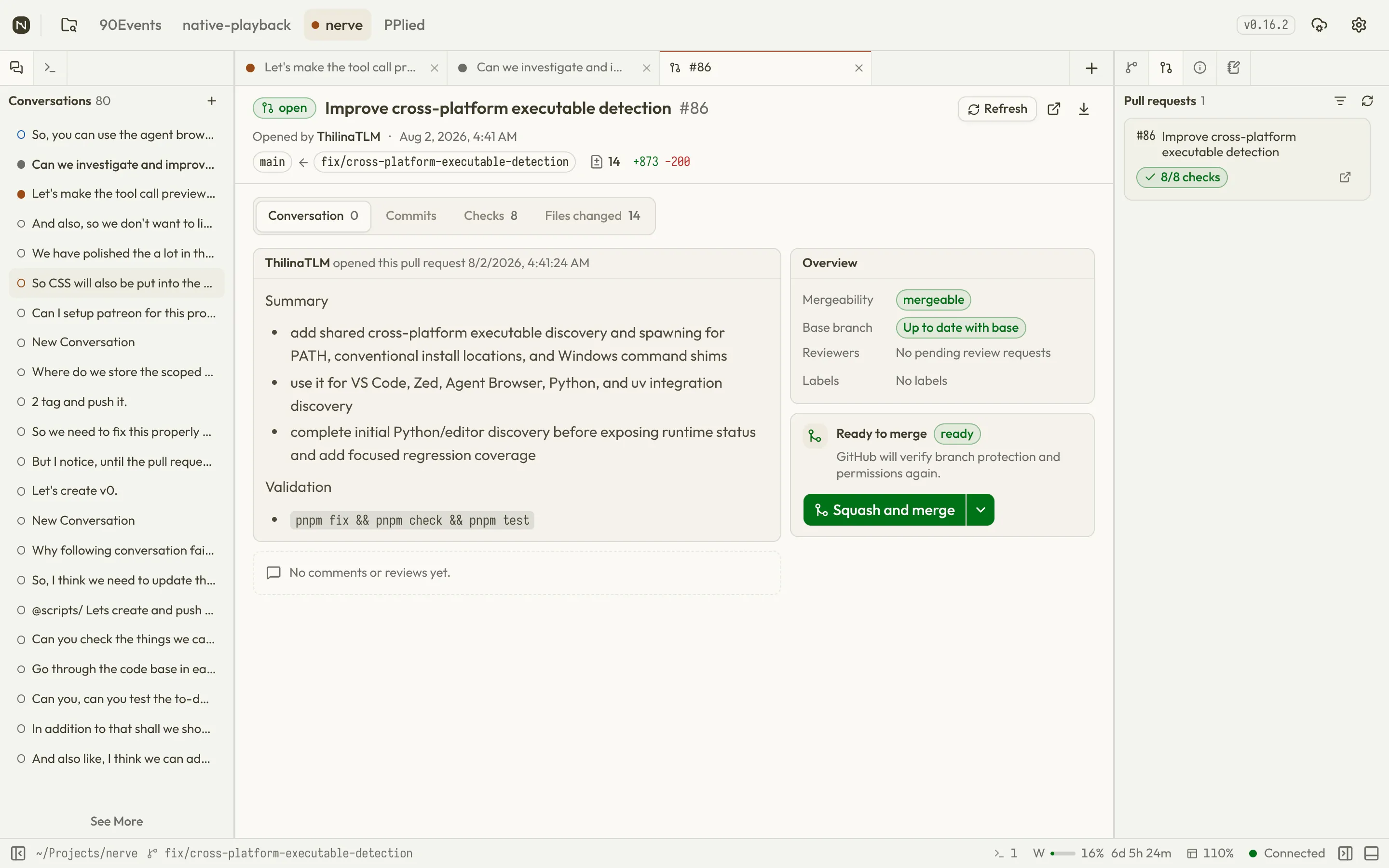
The Pull Requests panel shows status and lists. A PR tab can display the conversation, commits, checks, and changed files; it can check out or merge when the repository state permits.
Checkout and merge can modify local or remote state. Read the confirmation, working-tree status, target/base branch, and check results before proceeding.
Agent follow-ups
Section titled “Agent follow-ups”Contextual built-in suggestions can appear when Git state calls for committing changes, moving work off a base branch, or creating a PR. They insert agent instructions; they do not bypass Git review or tool approvals.